
The Idea In 60 Seconds
- Only one-third of employees feel adequately trained, creating a significant gap between ambition and execution.
- Employees are driving GenAI adoption informally, using tools like ChatGPT under their desk, leading to creative use cases but also inconsistencies and security risks.
- 82% of employees lack formal AI training, leaving many hesitant to use tools effectively.
- Just five hours of structured training can turn hesitant users into regular adopters, with 50% of employees actively seeking training opportunities.
- Without training, productivity gains remain unequal, AI anxiety worsens (69% of Australians fear job impacts), and advanced features go untapped.
- We need to train people on Gen AI.
Why Don’t We Train More People On Generative AI?
Everyone wants the productivity benefits of AI but few have found them yet. There’s a clear divide between ambition and execution. I believe (and the evidence suggests) that training is a critical component of why this is happening.
Employees everywhere lack the training, guidance, and confidence to use AI tools effectively. The gap is a manageable, strategic challenge that will make all the difference to the success or failure of AI initiatives.
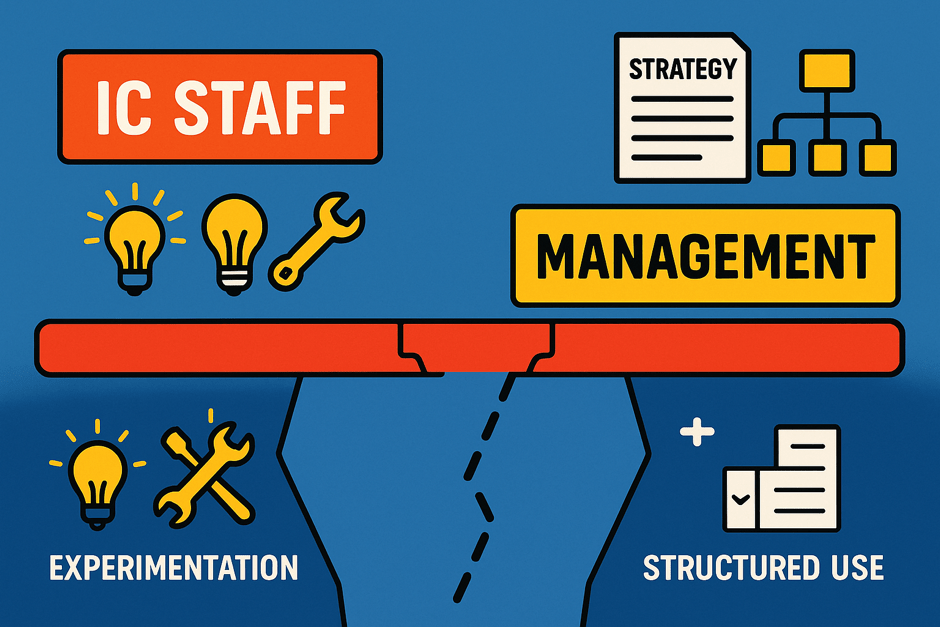
In my opinion, training is the key thing we can do to realise the potential of AI.
The Promise of AI: Ambition at the Top
AI adoption is a top priority for almost everyone. 70% of executives are investing in AI upskilling and transformation strategies.
But only one-third of employees feel adequately trained to use AI tools, and many organisations remain stuck in the planning phase, unsure of how to measure return on investment (ROI) or implement effective roadmaps.
Bottom-Up Experimentation: The Real Driver of Adoption
Employees are taking matters into their own hands. I bet you see them where you work. I do. Bottom-up experimentation has become the dominant force driving GenAI adoption. Workers are using tools like ChatGPT for almost everything you can imagine, often without formal guidance or oversight. This is the ‘under the desk and email it to myself AI’ that I’ve talked about in other articles.
This grassroots approach has its advantages. Early adopters are uncovering creative use cases (because they know the details of the business’ operations best) and demonstrating the value of GenAI. But without governance, the effects are problematic. People expose vulnerabilities, we end up with uneven adoption across teams. One example: tech-savvy roles report adoption rates as high as 50%, less technical roles lag far behind, with adoption rates closer to 20%.
The Role of Training: Bridging the Divide
Training is the one thing I focus on the most because I think it’s the one we can do most about. The lack of formal training is one of the most significant barriers to widespread GenAI adoption. 82% of employees have received no formal training on AI tools. That means people are hesitant to use these technologies, from a lack of confidence or a fear of making mistakes.
But, training really works. Research by BCG shows that just five hours of structured training can turn hesitant employees into regular users. And they want training. A McKinsey reports that 50% of employees actively want training, highlighting a clear demand for support.
What If We Don’t Train?
Without adequate training and support, the gap between AI ambition and execution will get worse. Again, the research shows that when you don’t train, productivity gains turn out to be highly unequal, with early adopters charging ahead while others struggle to keep up. Novice users often fail to realise the full potential of GenAI tools, leaving advanced features untapped.
This divide also makes AI anxiety worse. People are scared for their jobs. In Australia, 69% of workers express concerns about AI’s impact on their jobs. Employees who lack confidence in using AI tools are more likely to resist change.
A Call to Action
Structured training support clearly accelerates adoption and ensures consistency and scalability. In my view, the answer is simple. We should prioritise training, governance, and support to ensure that all employees can confidently use GenAI tools. AI’s success very clearly depends on both tools themselves and on the people who use them. I will write more about best practice when it comes to AI training.
 Neil Aitken - Blog