The idea in 60 seconds
- There are some economic benefits we’re going to get from Generative AI.
- But Generative AI may well also cause some problems, notably, potentially, contributing to unemployment.
- This is not the first time countries have experienced unemployment of this sort. (Structural unemployment.)
- Foreseeing Structural Unemployment caused by the technology and using the facilities Generative AI itself creates, to fix some of them, might be a sensible approach.
Generative AI is everywhere
Analysts are upbeat about the potential economic impacts of Generative AI.
- MIT suggests that Generative AI will improve office worker productivity will like be improved by up to 40%. (They’ve now studied both university and non university employees and found broadly similar productivity gains for each.)
- Goldman Sachs say Generative AI could contribute 7 percent to global GDP. Since global growth typically hovers around 2-3 percent per year, that’s quite a lot.
Generative AI will affect the whole economy and, importantly, impacts productivity
Productivity is important. An economist called Paul Krugman famously said “Productivity isn’t everything but in the long term it’s almost everything.” What he meant was – if you want to see a meaningful increase in the real lives of real people the only way to do it really is to help them raise their productivity.
Below : Productivity Levels In Australia over the last 10 years
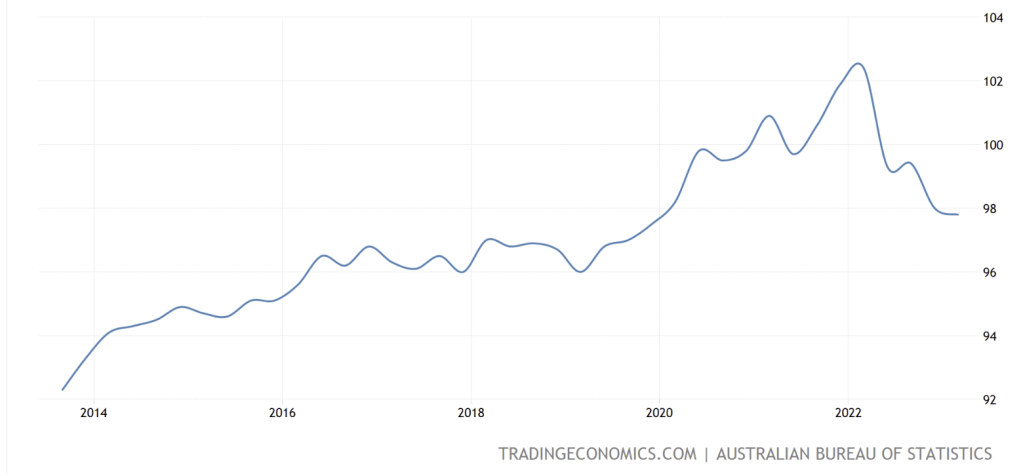
Australian productivity has been pretty flat for the last 8 or so years (not counting a temporary boost from COVID WFH.)
Source : Trading Economics
The productivity benefits of Generative AI can and likely will be applied across the whole economy, all at once. I feel like there’s a scrabble almost everywhere to make that happen. The problem is, it’s hard to believe that when individual workers are 40% more productive, managers won’t ‘cut’ some of the less useful team members they have – contributing to unemployment. Sam Altman has, himself admitted that Generative AI will cause unemployment.
What should the government be doing?

The benefits and costs of generative AI will be felt in Australia – sooner rather than later.
Source : Microsoft Image Generator (DALL-E)
We’ve seen Structural Unemployment before: The UK vs Germany – Approaches:
I’ve written before about growing up near the miners in the north of England. Margret Thatcher closing the mines caused Structural Unemployment (lasting unemployment brought about by technology change.) Many of those men never worked again. (And therefore the country paid them unemployment benefit and dealt with the negative social consequences of that unemployment for decades.)
Thatcher’s modus operandi (in general and when it came to the miners) was the cold application of the free market. Let the chips fall where they may.
That’s not the only approach that can be taken when dealing with Structural unemployment. In Germany, when they closed their coal mines, they dealt with the issue of Structural Unemployment head on.
They proactively retrained people in a substantial Federally funded education program. One can’t help but think, comparing the 2 approaches, that Germany’s is both more compassionate and more economically sensible.
There are a few things the government could do to assist in managing the potential structural unemployment Generative AI will produce
The most useful thing the government could do when it comes to Generative AI, in my view, is having a vision and a plan for a future which has been impacted by the technology. Now is the time they could be anticipating the potential, probable, unemployment we will experience and planning what we can do with it. What if the obstacle is the way?
The Khan academy has done some good work on their free educational courses. They’ve developed a Generative AI personal tutor to support students when they’re learning. The results have been incredible. The sort of focused attention this tutor provides, helps students learn in exactly the way which is right for them and at exactly the speed they need. Here’s a TED talk in which the owner of the Khan academy explains his scheme and it’s educational benefits.
While many jobs might be displaced, there are always opportunities and unfilled positions in the economy. The government knows what they are (they form a large part of the list of jobs we want migrants to do if they move to Australia.) Australia could mimic Germany’s approach to retraining those coal workers and, using Generative AI, do it at a much lower cost. They’d be using the technology that caused the problem, to fix it.
This article has referenced Generative AI because that’s what’s in the news but at some point, the same structural employment will happen with Van, Truck and Car Delivery Drivers. Estimates are that many of the 30% chunk of the economy which work in transport will also be displaced by AI (Self Driving Vehicles) – and need retraining. More generally, there are always some people unemployed who can benefit from targeted retraining. The businesses which need those trained staff would also support the scheme. It’s an unusual win / win / win.
There’s more to the required government response than just training
The government has a lot on its hands and retraining displaced workers is only one piece of the pie. We may well also all benefit from authorities assisting Australian businesses in rolling out the benefits of forecast GDP growth. That sort of thing would help them to deliver the benefits of Generative AI productivity sooner. Again, as I’ve written about before, the benefits of AI are likely to flow to companies so we need an approach which ensures individuals get to keep at least some of those productivity gains they provide – another government responsibility in this situation.
 Neil Aitken - Blog