Quick Overview
- To “Kill A Mockingbird” is a story with a message that I remember reading at school.
- It highlighted the human tendency to dispense with facts in some situations
- and, instead, rely on prejudice to decide who the piece’s villain is.
- When I look at the world now, however, the same bias is still there; it is only the subject of the bias which has changed.
- Johnny Depp and Christian Porter are examples of people who have suffered despite the facts being in their favour. (Some details on those cases are below and in other articles in this series.)
- The solution to the bias problem is the same now as in “To Kill a Mockingbird” – to examine the facts – as Harper Lee taught us.
How the HVV and HOV frameworks interact to generate bad outcomes – To Kill a Mockingbird.
To Kill A Mockingbird is a story about victimology and embedded prejudice. It is set in Alabama in the 1930s and is taught widely in schools around the world.
The point of the book (in my view) is that in some ways, especially when they default to their more base instincts, human nature means people are less interested in the facts of a matter than in assigned roles. (You can read about assigned roles in other articles I’ve posted as part of this series on the Hierarchy of Victims and Hero Villain Victim articles.
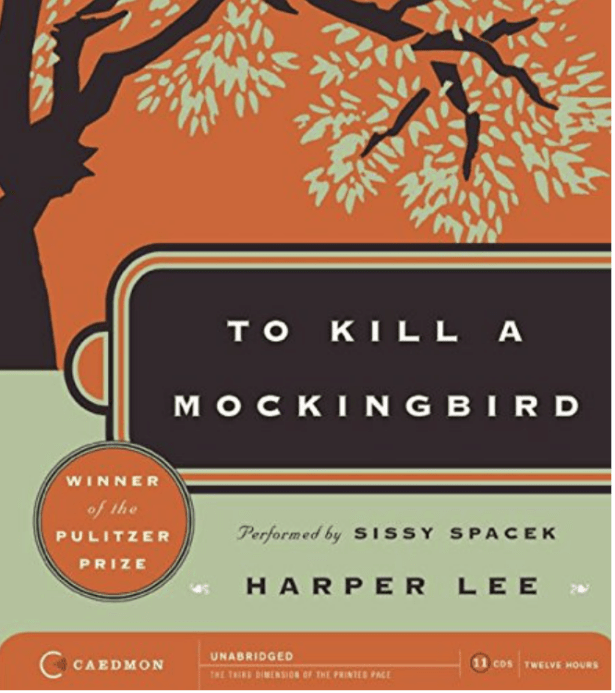
To Kill a Mockingbird is a story with a message I still remember 35 years after being taught about it in school.
In the book, a white woman accused a black man named Tom Robinson of rape. Substantial physical evidence, including Tom’s physically withered arm, indicated that the accused could not have committed the assault. Unfortunately, Robinson was still convicted and hanged.
Why was he dealt with unjustly?
In the story, Tom was determined ‘wrong’ simply because he was a black man and, in the minds of white people at the time, black men were bad. He was cast as a villain, despite actually being the victim. The woman was ‘right’ because she was white and ‘decent’ – a victim of the villain. The concept that he was the victim of her false claim ‘didn’t compute’ – it didn’t align with the biases of the time.
We think we’ve sorted the problem out by being ‘Woke’
We all feel better because we’ve tidied up our thinking about who the victim was in “To Kill a Mockingbird”. At the same time, we have yet to notice that the pea has moved from under one cup to under the second cup and that we’re still making the same mistakes – assigning categorical roles on sociological groupings rather than examining the facts. Only now, white men are society’s villains.
To add a metaphor, it’s like we figured out that we were playing 3-card Monty in the 1930s in ‘To Kill a Mockingbird. In each case, we took a step back and reviewed the facts, not the hero, villain, or victim model of the world, on which we can project convenient prejudice.

Cancel culture, which has appeared since the release of To Kill a Mockingbird, has simply changed the assumed villain in society – the one presumed guilty.
Instead of following these pre-assigned prejudices, we should more closely examine the data available on the subject and accept that all humans are capable of good or bad behaviour. This is a classic problem which has existed for a long time.
Parallels between the Book and The Johnny Depp Trial
It interests me that Johnny Depp was ‘Cancelled’ at the point of accusation. In some ways, it’s the same story as Tom Robinson. Because of being accused, Johnny Depp lost his contracts and film prospects. The evidence in the case has made it clear that his wife (Amber Heard) had lied. Nevertheless, society sees him as the villain and her as the victim based not on facts but on victimology and assigned roles.
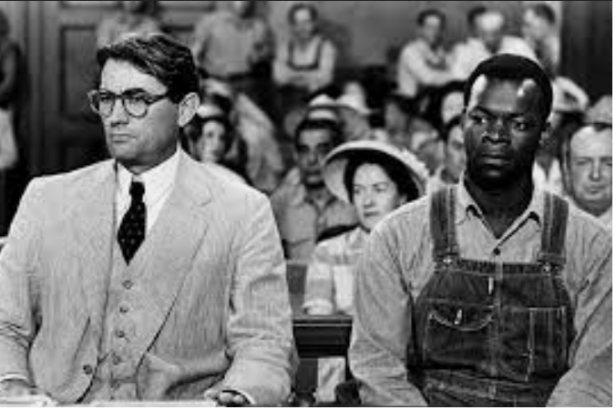
Above – Atticus Finch encourages consideration of the facts after the accused, Tom, is framed as a Villain, actually a victim.
Watching the news, it seems that it is mostly white men to which this happens. Chris North, Christian porter in Australia, and, of course, Mr Depp. Each of them lost everything simply as a result of being accused.
In conclusion
It’s amazing to me that I can remember now, so many years later, the tone of Harper Lee’s novel. It was calm and patient – no hyperbole or pretension. The book was a matter of fact, not angry, despite its challenging content. I got the impression like she’d accepted, perhaps reluctantly, her reality as a black person who was discriminated against at the time – and that’s just how it was. I’d have been angry if I had been in the same boat as Ms Lee.
To be fair, if we had a court case like that of Tom Robinson today, social media outrage would likely prevent him from being killed. That’s progress of a sort. On the other hand, many people, perhaps particularly black men, are sent to jail when innocent, even now.
Sometimes, as we’ve seen, the Outrage Machine fails. Other times, it works just fine – until it is challenged in court. In my next article, I’ll look at an example of that – the Johnny Depp Trial.
 Neil Aitken - Blog